|
|
|

|
3.3.41 |
TMEW2 |
|
Introduction |
| The TMEW2 board (Trunk Module for E&M World) provides four analog tie trunk circuits for E&M signaling for HiPath 3800. Each tie trunk circuit has eight connectors: incoming speech path (2), outgoing speech path (2), incoming signaling (2) and outgoing signaling (2). This allows tie trunk traffic to other private communication systems. |
| Interface types 1A and 5 are released for E&M networking with the Immediate Start, Wink Start, and Delay Dial protocols. Interface types 1A and 5 are identical. |
| For Thailand only: As of HiPath 3000/5000 V9, different impedance/level values can be selected. The setting is made via HiPath 3000/5000 Manager E (Station View - Template Editor). The board must be reset after any change to the impedance/level value. |
|
Note on E&M networking compatibility |
| TMEW2 does not support E&M interface types 1, 1B, 2 and 3 on the TIEL board. |
| The following options are available when replacing a HiPath 3750 or HiPath 3700 system with a HiPath 3800 system: |
| 1. | Switch customer-specific E&M networking to interface type 1A (or 5) on the TMEW2 board (Immediate Start, Wink Start or Delay Dial protocols). |
| 2. | If option 1 is not possible for technical reasons, HiPath 3750 or HiPath 3700 remains active as the E&M gateway. Create a TDM network with the CorNet protocol between the HiPath 3750 or HiPath 3700 system and HiPath 3800. |
Speech paths |
| Speech paths always use four wires (two wires for the incoming speech path and two wires for the outgoing speech path). The advantage of separate speech paths for the incoming and outgoing directions is that the stability (echo) of a connection is not adversely affected. In addition, repeaters in the transmission equipment compensate for attenuation loss on the line. |
Signaling paths |
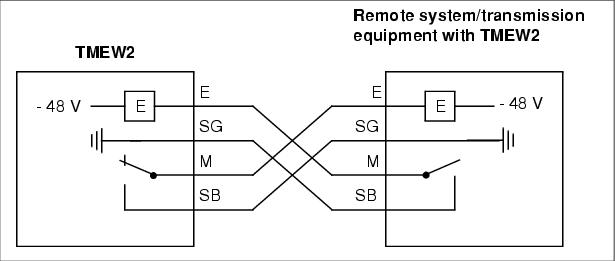
| E&M trunks are used for signaling between networked communications systems: E-wire = ear (receive), M-wire = mouth (transmit). |
Protocol settings |
| TMEW2 supports interface types 1A and 5. Interface types 1A and 5 are identical. |
| Before starting up the tie trunk, you must ensure that the two participating systems support the specified interface types. |
| The following signaling protocols are supported: |
| • | "Delay Dial" protocol |
| • | "Wink Start" protocol This is the most widely used protocol internationally. |
| • | "Immediate Start" protocol |
| HiPath 3000/5000 Manager E is used to set the signaling protocol. Settings Menu: Lines/networking ... -> Trunks -> (double-click) Parameters -> Template Editor: |
| • | Board type = TMDID, TIEL, TMEW2 |
| • | Template: the following settings are possible: |
| - | 4. E/M tieline with winkstart/delayed (= "Wink Start" protocol) |
| - | 11. E/M tieline with delayed dialing (= "Delay Dial" protocol) |
| - | 12. E/M tieline with immediate dialing (= "Immediate Start" protocol) |
| Interface type 1A (or 5) is used in all cases. |
| SIVAPAC connector assignment on the backplane with tie trunk traffic via interface type 1A (or 5) is shown in Table 3-162. |
Connecting the Genius announcement device |
| The TMEW2 board may be installed on interface type 2 for connecting the Genius announcement device. |
| Use HiPath 3000/5000 Manager E to configure the settings for the Genius announcement device: Settings Menu: Auxiliary equipment -> Announcement. |
| SIVAPAC connector assignment on the backplane with a Genius announcement device connected (interface type 2A) is shown in Table 3-163. |
Front panel |
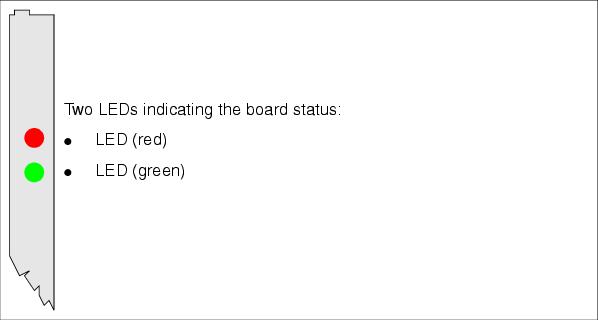
|
LED statuses and their meanings |
Cable and connector assignment |
| SIVAPAC connector assignment on the backplane depends on how the board is used. |
| • | Assignment in the case of tie trunk traffic via interface type 1A (or 5): Table 3-162. |
| • | Assignment in the case of Genius announcement device connection (interface type 2): Table 3-163. |
|
|
|
|
|
|
|
|
|
|
|
|
|
|
|
|
|
|
|
|
|
|
|
|
|
|
|
|
|
|
|
|
|
|
|
|
|
|
|
|
|
|
|
|
|
|
|
|
|
|
|
|
|
|
|
|
|
|
|
|
|
|
|
|
|
|
|
|
|
|
|
|
|
|
|
|
|
|
|
|
|
|
|
|
|
|
|
|
|
|
|
|
|
|
|
|
|
|
|
|
|
|
|
|
|
|
|
|
|
|
|
|
|
|
|
|
|
|
|
|
|
|
|
|
|
|
|
|
|
|
|
|
|
|
|
|
|
|
|
|
|
|
|
|
|
|
|
|
|
|
|
|
|
|
|
|
|
|
|
|
|
|
|
|
|
|
|
|
|
|
|
|
|
|
|
|
|
|
|
|
|
|
|
|
|
|
|
|
|
|
|
|
|
|
|
|
|
|
|
|
|
|
|
|
|
|
|
|
|
|
|
|
|
|
|
|
|
|
|
|
|
|
|
|
|
|
|
|
|
|
|
|
|
|
|
|
|
|
|
|
|||||||||||||||||||||||||||||||||||||||||||||||||||||||||||||||||||||||||||||||||||||||||||||||||||||||||||||||||||||||||||||||||||||||||||||||||||||||||||||||||||||||||||||||||||||||||||||||||||||||||||||||||||||||||||||||||||||||||||||||||||||||||
|
|
|
|
|
|
|
|
|
|
|
|
|
|
|
|
|
|
|
|
|
|
|
|
|
|
|
|
|
|
|
|
|
|
|
|
|
|
|
|
|
|
|
|
|
|
|
|
|
|
|
|
|
|
|
|
|
|
|
|
|
|
|
|
|
|
|
|
|
|
|
|
|
|
|
|
|
|
|
|
|
|
|
|
|
|
|
|
|
|
|
|
|
|
|
|
|
|
|
|
|
|
|
|
|
|
|
|
|
|
|
|
|
|
|
|
|
|
|
|
|
|
|
|
|
|
|
|
|
|
|
|
|
|
|
|
|
|
|
|
|
|
|
|
|
|
|
|
|
|
|
|
|
|
|
|
|
|
|
|
|
|
|
|
|
|
|
|
|
|
|
|
|
|
|
|
|
|
|
|
|
|
|
|
|
|
|
|
|
|
|
|
|
|
|
|
|
|
|
|
|
|
|
|
|
|
|
|
|
|
|
|
|
|
|
|
|
|
|
|
|
|
|
|
|
|
|
|
|
|
|
|
|
|
|
|
|||||||||||||||||||||||||||||||||||||||||||||||||||||||||||||||||||||||||||||||||||||||||||||||||||||||||||||||||||||||||||||||||||||||||||||||||||||||||||||||||||||||||||||||||||||||||||||||||||||||||||||||||||||||||||||||||||||||||||||||||||||||||||||||||
| HiPath 3000/5000 V9, Service Documentation, Issue 10 | up  |
|
|
||
| Disclaimer & Copyright | ID: P31003H3590S100017620 | 2014-02-27 |